

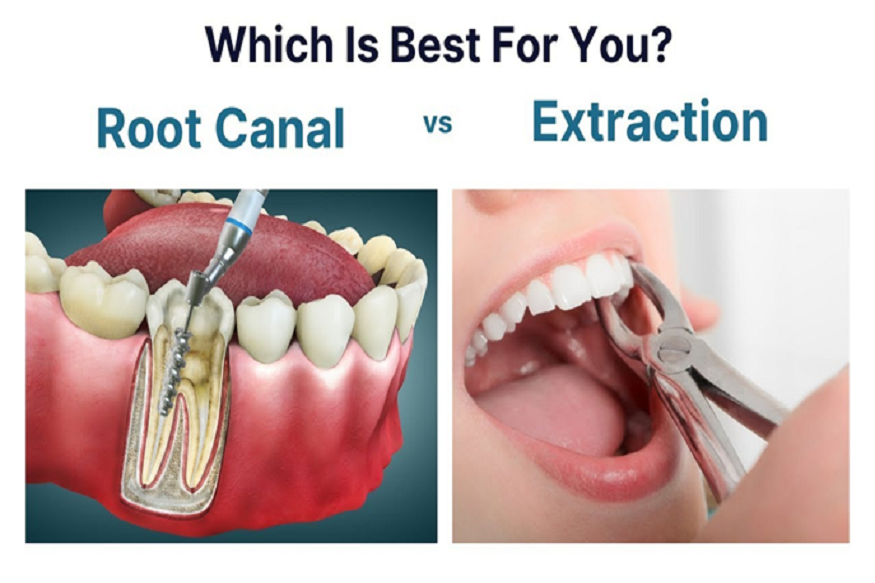
Your tooth has been making your life miserable. Maybe it started small — just a little twinge here and there. Then one morning you woke up and it was a whole different story. Eating hurts. Sleeping is rough. Even drinking something cold sends a jolt straight through your jaw.
So you finally dragged yourself to the dentist. And now you’re sitting there with two options staring you down. A root canal. Or pull the tooth out entirely.
Neither option sounds like a fun afternoon. That’s fair. But here’s the thing — once you actually know what each one involves, the whole decision gets a lot less intimidating. This guide puts both options side by side in plain, no-nonsense language. We’ll cover cost, recovery time, when each one makes sense, and how to figure out which choice fits your situation best.
Let’s break it all down so you can make the call with confidence.
What Is a Root Canal?
Think of a root canal as a rescue mission for your tooth. Every tooth has a soft inner layer — the pulp. It’s full of nerves and tiny blood vessels. Normally, it just sits there doing its thing. But when bacteria get in through a crack or a cavity? That pulp gets infected. And that’s where the serious pain comes from.
Read More: Understanding the Benefits of Root Canal Therapy
Root Canal Treatment goes in and clears out that infected pulp. The dentist cleans the inside of the tooth carefully, seals everything shut, and puts a crown on top. Your tooth is still there. Still yours. Just no longer a problem.
How a Root Canal Works
People are often shocked by how straightforward this is. Here’s what the process actually looks like:
- The area is numbed first — you shouldn’t feel much at all
- The dentist makes a tiny opening at the top of the tooth
- The infected pulp gets removed and the space is cleaned out
- Everything is filled and sealed up tight
- A crown is placed on top to keep the tooth protected
That’s really it. Most patients compare it to getting a filling done. Uncomfortable? Maybe a little. Terrifying? Not really. Root Canal Therapy in Houston is a routine procedure. Dentists do these all the time without breaking a sweat.
What Is a Tooth Extraction?
Now the other option. A tooth extraction means the tooth comes out. Completely. Root and everything.
Sometimes a tooth is just too far gone. Decay ran too deep. The crack went below the gum. The infection spread too wide. Saving it isn’t realistic anymore. In those situations, removing the tooth is actually the kinder, smarter choice.
There are two types worth knowing about. A simple extraction works on a fully visible tooth. A surgical extraction is used when the tooth is impacted, broken, or harder to reach.
How a Tooth Extraction Works
This procedure is quicker than most people expect. Here’s the general rundown:
- The dentist fully numbs the area before starting
- Specialized tools loosen the tooth gently from its socket
- The tooth is eased out — usually without much drama
- Gauze goes in to help the blood clot form properly
- You leave with aftercare instructions and a plan for healing
Wisdom Tooth Extraction in Houston is probably the most talked-about version of this. Wisdom teeth cause all sorts of grief — crowding, impaction, pain — and pulling them is incredibly common. A standard Tooth Extraction in Houston is just as routine, following pretty much the same steps.
When a Root Canal Is the Better Choice
Most dentists lean toward saving the natural tooth whenever they can. There’s a good reason for that. Natural teeth are strong. They anchor your bite. They keep your jawbone stimulated and healthy. An artificial replacement, no matter how good, is still just a replacement.
So when does a root canal make the most sense? A few things point in that direction.
Signs a Root Canal Makes Sense
Keep these in mind when weighing your options:
- The tooth itself is still largely intact and structurally sound
- The infection is contained to the pulp, not spreading into the bone
- Your gums and the bone around the tooth are still in decent shape
- You’d rather not deal with a gap in your smile
If your dentist looks at the X-ray and says the tooth is salvageable — that’s usually the green light. Go for the root canal. Skip the gap. Skip the hassle that comes with replacing a missing tooth later on.
The Upside of Keeping Your Tooth
Honestly? There’s a lot going for this route.
Your smile stays full. Chewing stays easy and natural. The teeth on either side don’t drift into the empty space. And you avoid the follow-up costs — a bridge, an implant, a denture — that come with a missing tooth. Saving the tooth now can genuinely save you money down the line. It’s worth thinking about.
When a Tooth Extraction Is the Better Choice
Sometimes, though, the tooth just can’t be saved. And removing it is absolutely the right call. That’s not defeat — it’s just smart dental care.
A tooth cracked below the gumline? A tooth so decayed there’s barely anything left? Trying to save that isn’t worth it. It only stretches out your pain and your bill.
Signs an Extraction Makes Sense
Here are the situations where pulling the tooth wins:
- The tooth is broken or rotted to a point where repair isn’t possible
- A spreading infection is threatening nearby healthy teeth
- There isn’t enough tooth structure left to hold a crown
- A wisdom tooth is impacted, crowded, or stirring up problems
Removing the tooth in these cases protects your mouth. It stops the infection from spreading. It clears the decks so your mouth can actually heal and move forward.
What Comes After an Extraction
Here’s the thing — pulling the tooth usually isn’t the finish line. That gap needs addressing eventually.
A dental bridge, an implant, or a partial denture can all restore your smile and your bite. Your dentist will walk you through what’s available. The goal is still a healthy, complete mouth. Removal just gets you to the starting line of that next chapter.
Comparing Cost and Recovery
Money is real. Healing time is real. These things matter, and it’s worth talking about them plainly.
What About the Cost?
Here’s a fact that catches a lot of people off guard. A root canal can actually be the cheaper path in the long run.
Yes, a root canal plus a crown costs more upfront than pulling a tooth. But once that tooth is gone, you’ll probably want to replace it. Add in the implant, the bridge, or the denture — plus the extra visits that come with those — and the total adds up fast.
If money is tight, it’s worth asking specifically about affordable root canal treatment Houston practices provide. Plenty of clinics offer flexible payment plans. Don’t assume you can’t afford to save your tooth before you’ve even asked.
What About Recovery?
Both procedures come with manageable recovery times. Neither one will knock you out for weeks.
Root canal recovery is typically mild. A day or two of tenderness. Maybe some sensitivity around the treated area. Most people are back to their regular routine the very next day. Basic over-the-counter pain relief is usually all it takes.
Extraction recovery takes a bit more patience. The socket has to close and clot properly. You’ll eat soft foods for several days. Straws are off the table — seriously, the suction messes with the clot. But within a week, the worst is usually behind you.
How to Decide Between the Two
Still not sure which way to go? That’s normal. This is a real decision with real consequences, and it’s okay to sit with it for a bit.
Questions to Ask Your Dentist
Before you commit either way, ask your dentist these directly:
- Is there a realistic chance this tooth can be saved?
- What are the risks if I go with each option?
- What does each one cost me right now — and later?
- How long am I looking at for recovery with each?
- What would you do if this were your own tooth?
That last question is a good one. Dentists are human too. Their gut answer tells you a lot. Combined with X-rays and a proper exam, you’ll walk out of that conversation with a real answer, not just a guess.
Trust the Experts and Your Gut
Your dentist isn’t pushing a procedure to fill a schedule. They want your mouth healthy. Trust that.
But don’t completely ignore your own read on things either. Your comfort level, your budget, your schedule — these are valid parts of the equation. The best choice is the one that works for your whole life, not just your mouth. People all across Houston have great dental options available. You don’t have to figure it out alone.
Final Thoughts
Let’s land this plane.
A root canal saves a tooth that still has a fighting chance. An extraction removes one that’s done. Neither option is the villain here. They’re both solutions. Just for different problems.
Read More: Common Dental Problems and How to Prevent Them
If the tooth can be saved — save it. A root canal keeps your smile intact and can be more economical over time. If it can’t? An extraction protects what’s left and sets you up for a fresh start.
Whatever you do, don’t stall. Dental problems don’t get better on their own. They fester. The sooner you act, the simpler the fix. Get in, get looked at, and make a decision you feel good about.
Your smile is genuinely worth the effort. With the right care and the right dentist, you’ll be laughing, eating, and going about your life pain-free sooner than you think.
Frequently Asked Questions
Is a root canal or extraction more painful overall?
Honestly, neither should hurt much during the actual procedure since both are done under local anesthesia. Afterward, a root canal usually means mild soreness for a day or two. An extraction can ache a little longer while the socket heals, but standard pain relief manages both situations just fine.
How long does healing take after each procedure?
Root canal recovery tends to wrap up quickly — most people feel pretty normal within a day or two of mild tenderness. Extraction healing takes a bit longer, roughly a week, as the socket closes and clots. Sticking to soft foods and getting solid rest both help speed the process along nicely.
Can I replace a tooth after having it pulled?
Absolutely — and in most cases, you really should. A gap left too long allows nearby teeth to shift out of alignment over time. Your dentist can walk you through options like implants, bridges, or dentures. Each one works to restore your bite, protect your jaw, and keep your smile looking full and complete.